
Why Does Food Keep Getting Stuck Between My Teeth?

Have you ever finished a meal only to find yourself constantly reaching for a toothpick or floss because food keeps getting trapped between certain teeth? While occasional food trapping can happen to anyone, persistent food getting stuck in the same area should not be ignored. Many people assume it's simply an inconvenience, but food getting lodged between teeth can actually be an early warning sign of underlying dental issues. If left
untreated, it can contribute to cavities, gum inflammation, bad breath, and even tooth movement over time. At Oyster Dental Care, we often see patients who come in with complaints about food trapping, only to discover that the issue is linked to gum recession, worn fillings, shifting teeth, or early decay. Understanding the cause is the first step toward finding a long-term solution. Is It Normal for Food to Get Stuck Between Teeth?
Occasional food trapping is normal, especially when eating fibrous foods such as meat, leafy vegetables, or popcorn. However, when food repeatedly gets stuck in the same spot, it usually indicates that something has changed in the way your teeth fit together.
Healthy teeth are designed to have proper contact points with neighboring teeth. These contact points help prevent food from becoming trapped during chewing. When those contact points weaken or gaps develop, food can become lodged more easily.
If you're frequently picking food out of the same area after meals, it's worth investigating the cause rather than simply managing the symptom.

Common Causes of Food Getting Stuck Between Teeth
1. Small Gaps Between Teeth
One of the most common reasons for food trapping is the presence of small spaces between teeth. These gaps may develop naturally over time or result from tooth movement.
Even a tiny gap can create enough space for food particles to become trapped repeatedly.
Once food begins collecting in that area, bacteria can thrive, increasing the risk of plaque buildup and gum irritation. Many adults notice these gaps becoming more apparent as they age, particularly if they have experienced gradual tooth movement.
2. Gum Recession
Healthy gums fill the spaces around teeth and help protect the areas where teeth meet. When gums recede, they expose more of the tooth surface and create spaces where food can collect.
Gum recession can occur due to:
Gum disease
Aggressive brushing
Teeth grinding
Age-related changes
As the gums pull away, food particles may become trapped more frequently, often leading to discomfort and inflammation.
3. Worn or Damaged Fillings
Dental fillings are designed to restore the natural shape and function of a tooth. However, over time, fillings can wear down, chip, or develop small gaps around their edges.
When this happens, the contact point between teeth may weaken, allowing food to become trapped. In some cases, patients assume the problem is food texture when the real issue is an aging restoration that needs attention. Regular dental check-ups help identify these problems before they become larger concerns.
4. Teeth Movement in Adults
Many people are surprised to learn that teeth can continue shifting throughout adulthood. Missing teeth, grinding, gum disease, and natural age-related changes can all affect alignment. When teeth move, the way they contact neighboring teeth changes. Areas that previously fit together properly may develop spaces where food becomes trapped. This is one reason food trapping is sometimes one of the first signs of tooth movement.
5. Cavities Between Teeth
Not all cavities are visible from the outside. Some develop between teeth, gradually changing their shape and creating small spaces where food can collect.
These cavities often remain unnoticed because they may not cause pain initially. However, recurring food trapping in the same location can sometimes be an early warning sign.
A dental examination and X-rays can help detect these hidden areas of decay.
Why Food Trapping Shouldn't Be Ignored
While food trapping may seem like a minor annoyance, repeated buildup can create several oral health problems.
Increased Risk of Cavities
When food remains trapped between teeth, bacteria have more time to feed on sugars and carbohydrates. This increases acid production and raises the likelihood of decay.
Gum Inflammation and Bleeding
Food particles that remain lodged between teeth can irritate the surrounding gums. Over time, this may lead to:
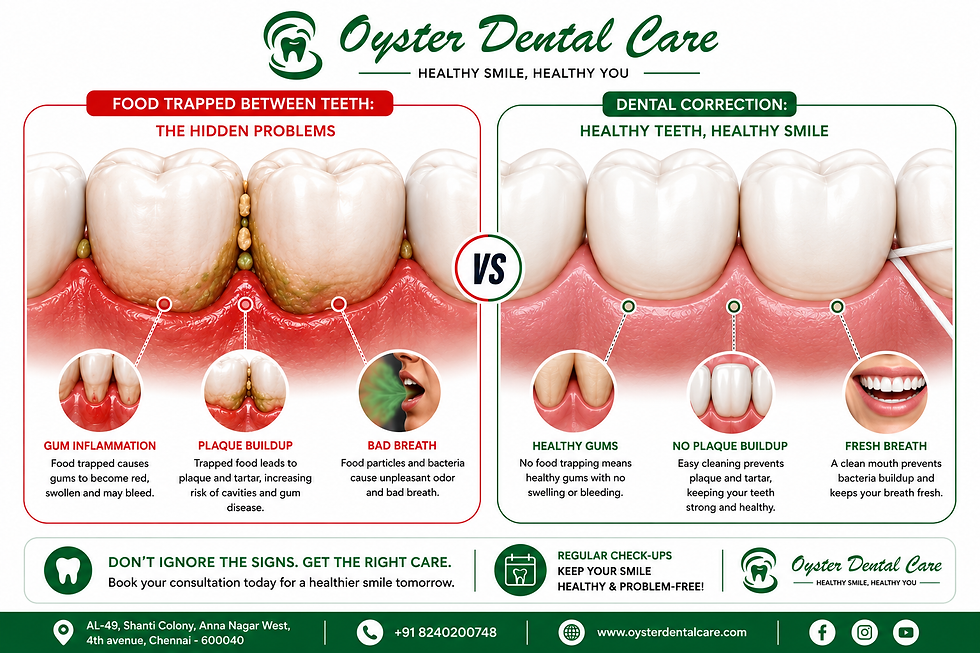
Redness
Swelling
Bleeding while brushing or flossing
Persistent irritation can eventually contribute to gum disease if left untreated.
Bad Breath
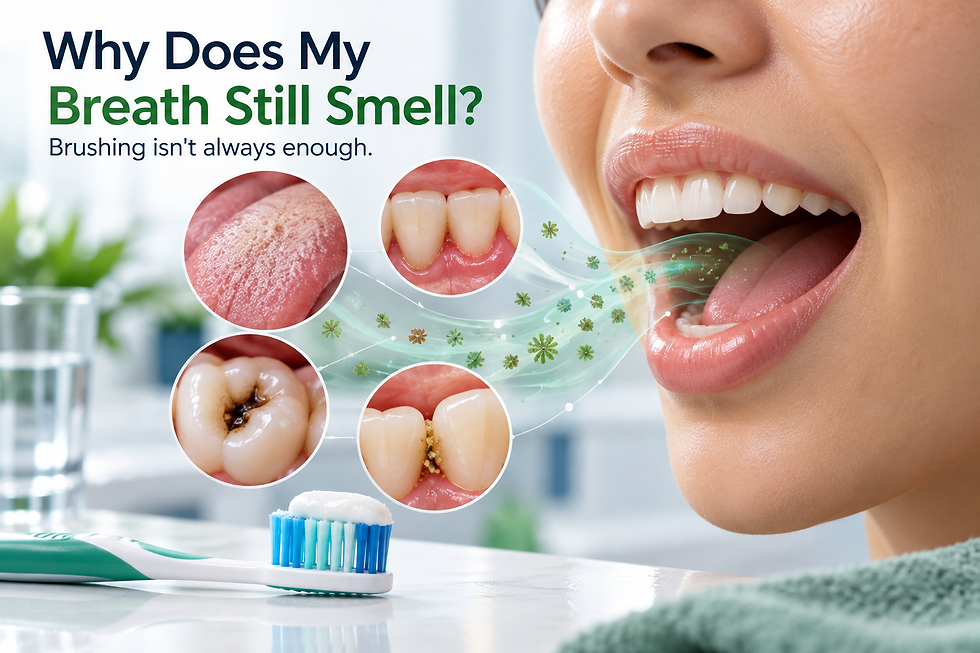
Food trapped between teeth provides an ideal environment for bacteria to grow. As these bacteria break down food particles, they can produce unpleasant odors that contribute to bad breath.
Tooth Movement and Bite Changes
If underlying causes such as gum disease or missing teeth are responsible for the food trapping, ignoring the issue may allow the problem to worsen over time.
How Can Food Trapping Be Fixed?
The best treatment depends on the cause. Potential solutions may include:
Professional Cleaning
Removing plaque and tartar can improve gum health and reduce inflammation around problem areas.
Replacing Worn Fillings
Damaged restorations can often be corrected to restore proper contact between teeth.
Treatment for Gum Disease
Addressing gum disease may help reduce pockets and improve support around teeth.
Orthodontic Treatment
Aligners or braces may be recommended if tooth movement has created problematic spacing.
Replacing Missing Teeth
Bridges or dental implants can prevent neighboring teeth from shifting and creating new food traps.
When Should You See a Dentist?
You should consider a dental evaluation if:
Food consistently gets stuck in the same place
The area bleeds while flossing
You notice a bad taste or odor
There is discomfort while chewing
You have visible gaps developing between teeth
Identifying the cause early can prevent more extensive treatment later.
Food getting stuck between teeth is often more than just a nuisance. It can be a sign of changes in your teeth, gums, fillings, or bite that deserve attention. The sooner the cause is identified, the easier it is to prevent future problems. If you're constantly dealing with food trapping or discomfort between your teeth, schedule a consultation at Oyster Dental Care for a thorough evaluation and personalised treatment plan.


Comments