
Why Do I Have A Bad Breath Even After Brushing?
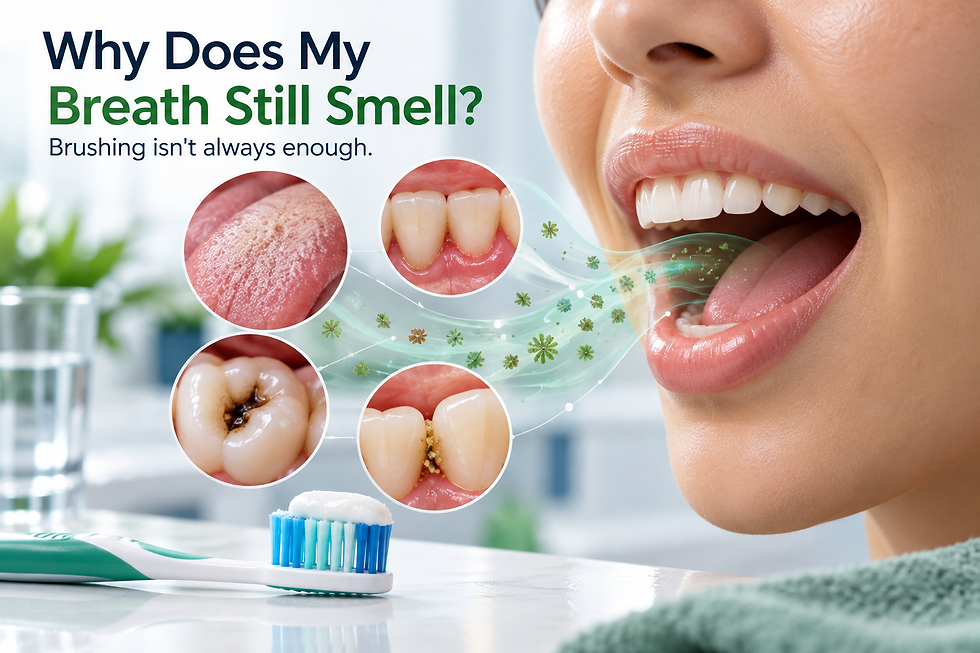
Bad breath is something almost everyone experiences from time to time. It can happen after eating strongly flavoured foods, drinking coffee, waking up in the morning, or simply going a long time without eating or drinking. However, when unpleasant breath keeps returning even after brushing, using mouthwash, or chewing gum, it may be a sign that something else is contributing to the problem. Persistent bad breath, also known as halitosis, can have several causes, including bacteria on the tongue, plaque around the gums, dry mouth, cavities, gum disease, certain foods and drinks, and tobacco use. At Oyster Dental Care, Anna Nagar, Chennai, we believe that managing bad breath starts with understanding its cause rather than simply trying to cover it up.
Why Does Your Breath Smell Even After Brushing?
Brushing your teeth is one of the most important parts of maintaining good oral hygiene, but it does not clean every area of your mouth equally. Bacteria and food particles can remain on the tongue, between the teeth, and around the gumline, particularly when these areas are not cleaned consistently. Oral bacteria can produce unpleasant-smelling compounds as they break down food debris and other substances, which means brushing your teeth may sometimes provide only temporary relief if the actual source of the odour is still present. Persistent bad breath therefore does not necessarily mean that you are brushing incorrectly or not brushing enough. Instead, it may be a sign that another part of your oral-care routine or an underlying dental problem needs attention.
Your Tongue May Be Part of the Problem
The tongue has a naturally uneven surface with tiny grooves and structures where bacteria, food particles and dead cells can accumulate. For some people, particularly when there is a noticeable coating on the tongue, this buildup can contribute significantly to bad breath. Gentle tongue cleaning can therefore be a useful addition to your daily oral-hygiene routine. A tongue scraper or the tongue-cleaning surface found on some toothbrushes can help remove buildup, but it is important not to scrub aggressively because excessive pressure can irritate the tongue. Tongue cleaning can support fresher breath, but it should be considered one part of a complete oral-care routine rather than a standalone solution.
Why Night Brushing Matters More Than You Think

One of the simplest habits to underestimate is brushing your teeth before bed. During the day, plaque, food debris and bacteria naturally accumulate on your teeth and around your gums. Brushing at night helps remove this buildup before you go to sleep, which is particularly important because saliva flow generally decreases during sleep. Saliva plays an important role in naturally cleansing the mouth, so when production is reduced, bacteria and leftover food particles can remain in the oral environment for longer. Going to bed without brushing essentially gives plaque and bacteria several uninterrupted hours to remain in your mouth. A good night-time routine should include brushing with fluoride toothpaste and cleaning between your teeth, along with gentle tongue cleaning when appropriate. Your morning brush may help you feel fresh for the day, but your night-time brush helps clean away what accumulated throughout the day.
Can Gum Disease Cause Bad Breath?
Persistent bad breath can sometimes be associated with gum disease. Plaque that remains around the gumline can trigger inflammation, and as gum disease progresses, deeper spaces may develop around the teeth where bacteria and debris become more difficult to remove. These areas can contribute to persistent unpleasant odour. Bad breath is particularly worth investigating when it appears alongside symptoms such as bleeding gums, redness, swelling, tenderness, gum recession or loose teeth. Bleeding while brushing or flossing should not simply be accepted as normal, because it can be a sign that the gums are inflamed and may benefit from professional assessment. Treating the underlying gum problem is often more effective than repeatedly using products designed only to mask the smell.
Can Cavities or an Infected Tooth Cause Bad Breath?
Dental decay can also contribute to unpleasant breath. A cavity may create a space where food and bacteria become trapped, particularly when the area becomes difficult to clean. As decay progresses, the odour may become more noticeable. Infections involving the inside of a tooth can sometimes produce an unpleasant taste or smell as well, especially when there is drainage from the affected area. If you notice that the odour seems to come from one particular part of your mouth, or if bad breath is accompanied by tooth pain, sensitivity, swelling or a recurring bad taste, it is important to have the area examined rather than relying on mouthwash or breath mints.

Dry Mouth Can Make Bad Breath Worse
Saliva is an important part of your mouth's natural defence system. It helps lubricate the tissues, wash away food particles and support the mouth's ability to manage bacteria and acids. When the mouth becomes unusually dry, food debris and bacteria may remain for longer, which can contribute to unpleasant breath and increase the risk of other oral-health problems. Dry mouth can have many possible causes, including dehydration and certain medications. If you regularly experience a dry mouth, particularly when it occurs together with persistent bad breath or increased dental problems, it is worth discussing the issue with your dentist or doctor so the underlying cause can be considered.
Coffee, Tea, Tobacco and Other Habits Can Affect Your Breath
What you eat and drink can also affect how your breath smells. Coffee, alcohol, strongly flavoured foods and certain spices can temporarily alter the smell of your breath, while tobacco can contribute to persistent mouth odour and also negatively affect the gums and other tissues in the mouth. These factors do not necessarily indicate that a dental disease is present, but they can make an existing problem more noticeable. Drinking water regularly, maintaining a consistent oral-hygiene routine and limiting tobacco use can all support fresher breath and better oral health. When bad breath continues despite these measures, however, it is worth considering whether there is an underlying dental cause.
Is Mouthwash Enough to Get Rid of Bad Breath?
Mouthwash can make your mouth feel fresher, and certain products may help reduce particular types of bacteria or support the management of specific oral conditions. However, mouthwash should not be viewed as a replacement for brushing, cleaning between the teeth, or professional dental care. If bad breath returns soon after the effect of the mouthwash wears off, the product may simply be masking the symptom rather than addressing its source. The right approach depends on why the odour is occurring in the first place. A dentist can help determine whether the issue is related to plaque, gum inflammation, cavities, dry mouth or another oral-health concern.
Does Tongue Scraping Really Help?
For people with significant tongue coating or buildup, tongue cleaning can be a useful part of a daily oral-hygiene routine and may help reduce some sources of mouth odour. However, tongue scraping is not a universal treatment for persistent bad breath. It will not treat a cavity, gum disease, an infected tooth or other underlying dental problems. The most effective approach is usually to combine gentle tongue cleaning with regular tooth brushing, cleaning between the teeth, good hydration and routine dental care. Think of tongue cleaning as one useful part of the overall routine rather than a substitute for everything else.
What Is the Best Night-Time Routine for Fresher Breath?
A consistent night-time routine is one of the simplest ways to support better oral hygiene and reduce the buildup that can contribute to bad breath. Start by brushing your teeth gently for around two minutes using fluoride toothpaste and make sure you reach the gumline and all accessible tooth surfaces rather than focusing only on the front teeth. Next, clean between your teeth using floss or another interdental cleaning method that suits you, because plaque and food debris can remain between teeth even when brushing is thorough. If your dentist recommends tongue cleaning, do this gently without excessive pressure. Going to sleep with a clean mouth helps reduce the amount of plaque and debris that remains in place during the hours when saliva flow is naturally lower.
Why Cleaning Between Your Teeth Matters
Some people brush very carefully but still experience bad breath because they never clean between their teeth. These areas are difficult for a toothbrush to reach effectively, so plaque and food particles can accumulate, especially where teeth are crowded or positioned close together. Over time, this buildup can contribute to both unpleasant odour and gum inflammation. Floss, interdental brushes and other cleaning methods can all be useful depending on your tooth spacing and gum health. The most important thing is choosing an approach that suits you and using it consistently. Your dentist can also show you the appropriate technique if you're unsure how to clean between your teeth effectively.
When Is Bad Breath a Sign You Should See a Dentist?
Occasional morning breath or temporary odour after certain foods is not unusual, but persistent bad breath deserves a closer look. You should consider scheduling a dental examination if unpleasant breath continues despite good oral hygiene, particularly when it occurs with bleeding gums, swollen or painful gums, tooth sensitivity, tooth pain, a persistent bad taste, loose teeth or recurring discomfort. A dentist can examine your teeth, gums and other parts of your mouth to identify possible causes such as plaque buildup, gum disease, cavities, damaged teeth or other oral conditions. The important thing to remember is that bad breath is a symptom, not a diagnosis, and the most effective treatment depends on finding the reason it is happening.
How Can You Prevent Bad Breath?

Preventing persistent bad breath starts with maintaining the health of your mouth rather than relying on temporary freshening products. Brush twice a day with fluoride toothpaste and make your night-time brushing routine a priority. Clean between your teeth regularly, keep your tongue reasonably clean, drink enough water and limit tobacco use. It is also important to maintain regular dental examinations so that problems such as plaque buildup, gum disease and cavities can be identified and treated before they become more complicated. These everyday habits may seem simple, but consistency is what makes them effective over time.
Fresh Breath Starts Before Breakfast
Bad breath is not always about how often you brush. It can be about where you clean, when you clean, and what is causing the odour in the first place. Your night-time oral-care routine deserves particular attention because it removes the day's accumulation of plaque and food debris before you spend several hours asleep with reduced saliva flow. So, if you regularly find yourself wondering why your breath smells even after brushing, look beyond the toothbrush and consider the bigger picture: your tongue, your gums, the spaces between your teeth, your hydration, your diet and the overall condition of your mouth.
At Oyster Dental Care, Anna Nagar, Chennai, we can assess the possible dental causes of persistent bad breath and help you understand the most appropriate next step. Whether the issue is plaque buildup, gum inflammation, a cavity, dry mouth or another dental concern, identifying the underlying cause is more useful than repeatedly masking the smell with temporary solutions. Good oral hygiene at home combined with appropriate professional care can help you maintain healthier teeth and gums as well as fresher breath.


Comments